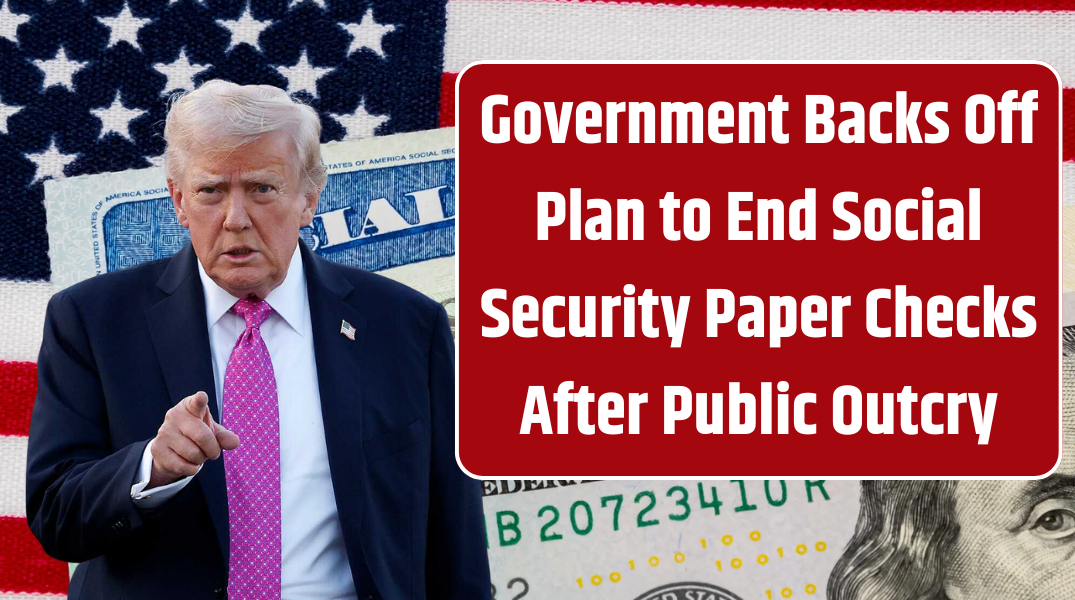
After months of insisting that paper Social Security checks would be permanently phased out, the U.S. government is quietly easing its stance. Just days after the supposed “final” deadline passed, officials confirmed that paper checks will continue for those who have no other way to receive their monthly benefits.
This reversal comes amid growing criticism that the abrupt end to mailed checks could leave thousands of elderly and disabled Americans without access to their payments — especially those in rural areas or without bank accounts.
A Push Toward Digital Payments
On September 30, 2025, the Social Security Administration (SSA) officially ended paper checks for most retirees, marking a historic shift in how federal benefits are distributed. The first Social Security check was issued in 1940 to Ida May Fuller, beginning an 85-year tradition of mailed payments that has now largely come to an end.
The move stemmed from a March executive order signed by President Trump directing federal agencies to eliminate paper checks “to the extent permitted by law.” The administration cited multiple reasons for the change — including cost efficiency, fraud prevention, and improved convenience for recipients.
According to the U.S. Treasury Department:
- Paper checks are 16 times more likely to be reported stolen than electronic transfers.
- It costs about 50 cents to issue a paper check, compared to just 15 cents for an electronic payment.
The SSA said that 99.4% of more than 69.5 million beneficiaries already receive payments through direct deposit or the Direct Express debit card, proving that most Americans have adapted to the digital era.
Millions Adjust, But Thousands Still Depend on Paper Checks
Despite the progress toward digital payments, roughly 400,000 beneficiaries still rely on paper checks — down from 456,000 in March.
California leads the nation with about 43,000 paper check recipients, followed by Texas (28,000) and Florida (24,000). Many of these beneficiaries are older adults living in remote or rural areas with limited access to banks or reliable internet service.
Nancy Altman, president of the advocacy group Social Security Works, warned that cutting off paper checks would disproportionately harm vulnerable populations.
“They lack the money to open bank accounts, maintain minimum balances, and pay bank fees,” Altman said. “They may lack the mental or physical ability to navigate anything beyond cashing a paper check to meet their basic needs — food, rent, and medicine.”
Government Quietly Softens Its Deadline
Although the SSA previously set September 30 as the final date for paper checks, the agency is now walking back that strict cutoff.
In a blog post published September 19, the SSA reassured beneficiaries that payments would not be paused or stopped for those unable to switch to electronic methods in time.
“If you have no other way to receive payments, we will continue to issue paper checks,” the agency stated. “There are no plans to pause any payments starting October 1.”
Matthew Bilenki, the SSA’s director of finance and management, also confirmed that paper checks will continue to be issued “to beneficiaries who have no other means of receiving payment.”
How to Receive or Switch Your Payments
Beneficiaries still relying on paper checks have several options to ensure uninterrupted access to their benefits.
1. Direct Deposit
Those with checking or savings accounts can set up direct deposit by visiting the “my Social Security” portal online or calling their local SSA office. This method ensures your payment is deposited directly into your bank each month.
2. Direct Express Debit Card
For recipients without bank accounts, the Direct Express card is a secure alternative. Funds are loaded directly onto a government-issued debit card, which can be used anywhere Mastercard is accepted.
- Call 1-800-333-1795 or visit usdirectexpress.com to enroll.
3. Waiver Option
Individuals who cannot use electronic payments for legitimate reasons can apply for an exemption.
- Call the U.S. Treasury Department at 1-877-874-6347 to request a waiver.
Each paper check now includes an informational insert explaining how recipients can switch to digital payments step-by-step. In addition, the SSA is conducting outreach through phone calls, emails, and mailers to guide seniors through the transition.
What This Means for Beneficiaries
The SSA’s decision to keep paper checks available — even if only for a limited group — shows a recognition of the practical barriers many older Americans face. While the government continues to promote electronic payments as the safest and most cost-effective method, officials say no beneficiary will be left without their check simply because they cannot transition online.
For now, seniors and people with disabilities can rest assured that their monthly benefits will continue to arrive, whether electronically or by mail.
Frequently Asked Questions (FAQs)
Q1: Is the government really ending Social Security paper checks?
Not entirely. While the SSA officially stopped issuing paper checks for most beneficiaries on September 30, 2025, it will continue sending them to individuals who have no other way to receive payments.
Q2: Why does the government want to eliminate paper checks?
Paper checks are expensive and prone to theft or loss. Electronic transfers are faster, more secure, and significantly cheaper to process.
Q3: How can I switch from paper checks to direct deposit?
You can log into your my Social Security account at ssa.gov/myaccount and select the direct deposit option, or contact your local SSA office.
Q4: What if I don’t have a bank account?
You can receive your payments through the Direct Express debit card program, which doesn’t require a bank account.
Q5: Can I still get a paper check if I can’t go digital?
Yes. Call the U.S. Treasury at 1-877-874-6347 to request a waiver if you’re unable to use electronic methods.
Q6: Are there risks with direct deposit or Direct Express?
Both options are considered secure. They eliminate the risks of lost, delayed, or stolen paper checks, and funds are available immediately on payment day.
Q7: What’s the deadline to switch?
There is currently no hard cutoff date. The SSA has confirmed that payments will continue for those who haven’t switched yet.
Bottom Line:
The federal government’s digital push remains in motion, but compassion and practicality have forced officials to slow down the process. For now, Social Security beneficiaries can breathe a little easier — paper checks aren’t disappearing just yet.