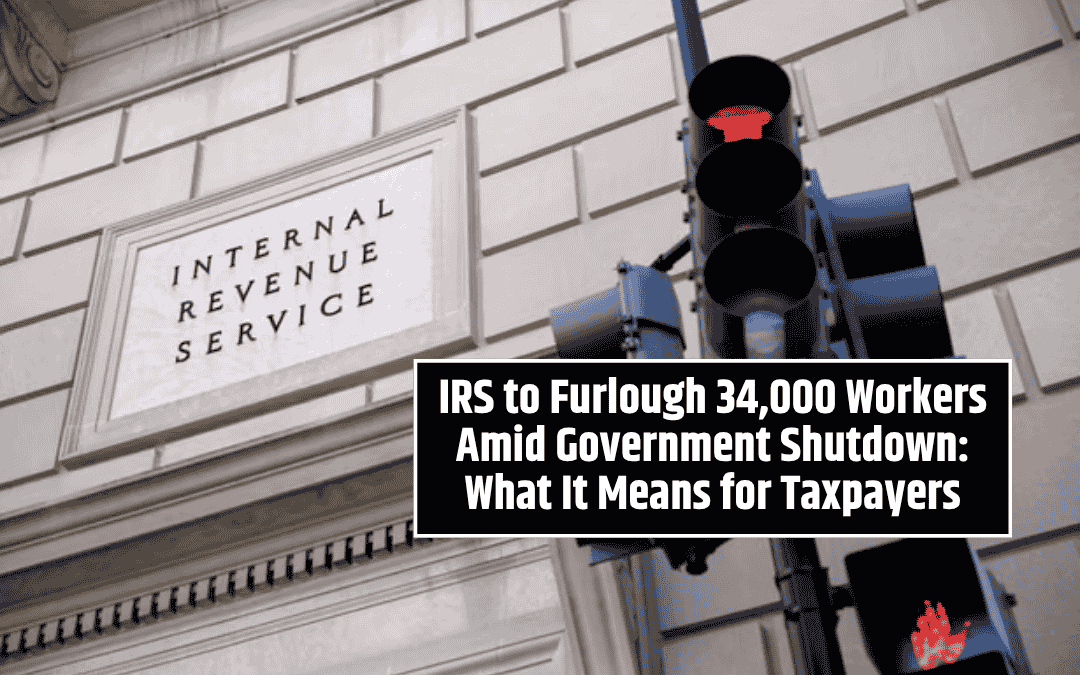
The Internal Revenue Service (IRS) announced that it will furlough nearly half of its workforce—around 34,000 employees—as the ongoing government shutdown continues to disrupt federal operations.
The decision, effective October 8, will significantly reduce taxpayer services and slow critical functions such as refund processing, compliance assistance, and customer support.
Nearly Half of the IRS Workforce Impacted
In an official statement released Wednesday, the IRS said the furlough was due to the “lapse in appropriations”, meaning Congress has not yet passed a funding bill to keep the government fully operational.
“Employees who are not exempt or excepted are furloughed and placed in a non-pay and non-duty status until further notice,” the agency explained. Those affected will be given up to four hours to finish ongoing tasks, secure confidential materials, and receive their formal furlough notifications.
The move will leave 53.6% of IRS employees—about 39,870 workers—on duty, primarily those deemed essential to maintaining core operations such as security, IT, and emergency systems.
What the Furlough Means for Taxpayer Services
With nearly half of the agency’s staff sidelined, taxpayers are being warned to expect delays, longer wait times, and reduced access to assistance.
The National Treasury Employees Union (NTEU), which represents IRS workers, strongly criticized the move. Its president, Doreen Greenwald, said:
“Due to the government shutdown, the American people lost access to many vital services provided by the IRS. Expect increased wait times, backlogs, and delays implementing tax law changes as the shutdown continues.”
The timing is especially troubling as millions of taxpayers are preparing to file extension returns, which are due next week. Many who rely on IRS support to finalize or correct their filings may find themselves unable to reach an agent or receive timely guidance.
The Furlough Process: Who Is Exempt and Who Is Not
Under federal law, agencies must identify which employees are “excepted” or “exempt” from furloughs during a funding lapse.
- Excepted employees are those whose work is necessary to protect life, property, or national security.
- Exempt employees are those whose salaries are funded through non-appropriated sources, such as user fees or trust funds.
All others are placed in non-pay, non-duty status until funding resumes. The IRS noted that affected employees must report for their next scheduled tour of duty to complete shutdown activities before officially stopping work.
Employees Will Not Be Paid During the Shutdown
In a standard furlough letter distributed to affected staff, David Traynor, the acting IRS Human Capital Officer, confirmed that furloughed employees cannot work and will not be paid while the government remains shut down.
However, Traynor’s letter emphasized that employees will be compensated retroactively once the funding lapse ends. “Employees must be compensated on the earliest date possible after the lapse ends, regardless of scheduled pay dates,” he wrote.
Confusion Over Back Pay Promises
The decision to furlough workers comes just one day after a White House memo hinted that furloughed employees might not receive back pay, contradicting existing law.
In 2019, then-President Donald Trump signed the Government Employee Fair Treatment Act (GEFTA), guaranteeing that federal employees automatically receive back pay after any future shutdowns. The law was passed following a record 35-day shutdown that left hundreds of thousands of government workers without paychecks.
Despite the memo’s language, the IRS’s internal communication suggests the agency intends to follow GEFTA’s requirements. Still, uncertainty remains for workers as the political standoff in Congress drags on.
Broader Impact on the Public and the Economy
The IRS furlough adds to the growing list of federal services being curtailed due to the shutdown. Beyond delayed refunds and slower phone support, several IRS operations—such as processing amended returns, issuing taxpayer identification numbers, and managing enforcement cases—will likely be paused.
Tax experts warn that prolonged disruption could cause ripple effects across the economy, especially for small businesses awaiting tax credits, refunds, or compliance rulings. The uncertainty may also affect public confidence in the government’s ability to manage essential services efficiently.
The Union’s Response and Ongoing Negotiations
The National Treasury Employees Union has vowed to continue advocating for IRS workers, calling on Congress to restore funding and end the furloughs.
“This shutdown is not just hurting federal employees—it’s hurting the American people,” Greenwald said. “Taxpayers depend on the IRS for accurate, timely information, and now they’ll be left waiting.”
Meanwhile, political leaders remain at an impasse over federal spending priorities, with no clear end to the shutdown in sight. If the stalemate continues, it could further delay the IRS’s ability to resume full operations ahead of the 2026 tax filing season.
What Taxpayers Can Do in the Meantime
Taxpayers are advised to continue filing returns, making payments, and accessing IRS online tools. Electronic systems, including IRS.gov, remain operational, allowing users to check refund statuses, set up payment plans, or download forms.
However, customer service response times are expected to be significantly longer, and paper correspondence may not be processed until after the shutdown ends.
The IRS encourages taxpayers to use automated digital services whenever possible and to stay informed through official updates on IRS.gov/newsroom.
The Bottom Line
The furlough of 34,000 IRS employees underscores the widespread impact of the ongoing government shutdown. With nearly half of the agency’s workforce sidelined, taxpayers should prepare for delays, reduced service availability, and extended processing times.
Until Congress restores funding, the IRS will operate with a limited staff, prioritizing only essential functions. Both employees and taxpayers now face an uncertain wait for the government to reopen—and for business to return to normal.