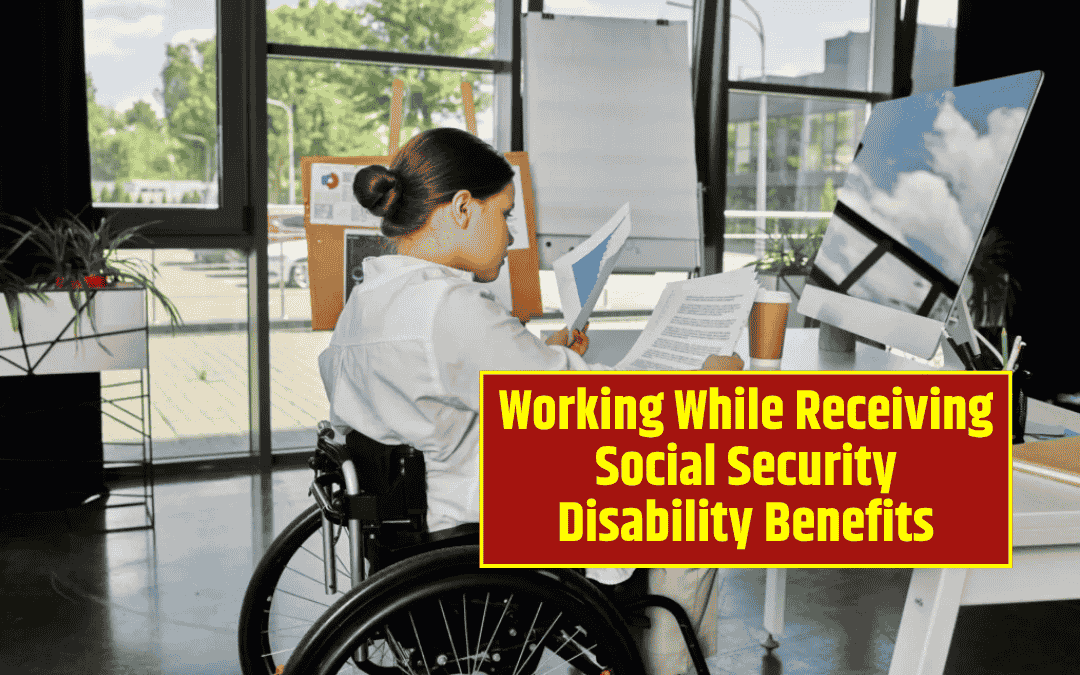
Many people who receive Social Security Disability benefits eventually want to return to work. The good news is, you can test your ability to work without immediately losing your benefits. The Social Security Administration (SSA) offers specific programs that make this process flexible and secure.
Your First 9 Months: The Trial Work Period
You can return to work for at least nine months and still receive your full Disability payments. This phase is called a trial work period (TWP).
In 2025, any month in which you earn over $1,160 before taxes counts toward your nine trial months. These months don’t have to be consecutive—they can occur at any time within a rolling five-year period.
During this time, there’s no limit to how much you can earn. It’s your opportunity to test the waters, gain confidence, and see if you’re ready to rejoin the workforce.
The Next 3 Years: Extended Period of Eligibility
Once you finish your trial work period, you enter a 36-month phase known as the Extended Period of Eligibility (EPE). This period gives you even more flexibility while you work toward financial independence.
During the EPE, you can still receive Disability benefits for any month in which your earnings fall below the Substantial Gainful Activity (SGA) level. In 2025, that amount is $1,620 per month, or $2,700 if you’re blind.
If your income exceeds the limit in a given month, you simply won’t receive a Disability payment for that month. However, your benefits can restart automatically if your earnings drop below the limit during this period.
What Happens After the EPE Ends
Once your 36-month extended period is over, your Disability benefits will generally stop if you continue to earn more than the SGA limit. However, if your medical condition prevents you from continuing to work, you may qualify to restart your benefits quickly without having to reapply.
This safeguard—called expedited reinstatement—allows you to receive benefits again if your disability worsens or you can’t maintain employment.
When Your Earnings Limit Can Increase
During your extended eligibility period, your monthly earnings limit might increase if you have certain work-related expenses tied to your disability.
For example, if you spend $250 per month on special transportation or assistive devices needed for work, you can earn an extra $250 each month without affecting your benefits. These are called impairment-related work expenses (IRWEs).
Additionally, if your employer provides a subsidy—like extra paid breaks, a flexible schedule, or reduced workload—the SSA may count that as part of your support.
For instance, if your employer reports that your additional assistance is worth $100 per month, you can earn up to $100 more than the regular limit without reducing your benefit. Always report your expenses and subsidies when you notify SSA about your work activity.
Keeping Your Medicare Coverage While Working
You don’t have to lose your health coverage when you return to work. The SSA provides extended Medicare protection to ensure you continue receiving medical care while transitioning back to employment.
During the Trial Work Period and Following 93 Months
You can usually keep Medicare Part A (hospital insurance) at no cost, even while you work. If you choose to keep Part B (medical insurance), you can do so by continuing to pay your regular premium.
This means you can retain your Medicare coverage for up to 93 months after your trial work period—that’s nearly eight years of continued protection.
After That
After your extended coverage period, you can continue your Medicare by paying for both Part A and Part B as long as you still meet the SSA’s definition of disability.
Once you reach age 65, Part A typically becomes premium-free again, just as it does for other Medicare-eligible adults.
The Bottom Line
Social Security’s work incentives make it easier for people with disabilities to explore employment without risking their benefits. Whether you’re just testing your ability to work or planning to return full-time, these rules are designed to help you transition confidently and maintain your healthcare coverage.
FAQs
How long can I work while still getting Disability benefits?
You can work for at least nine months during a trial work period and still receive your full Disability payments. In 2025, any month you earn over $1,160 before taxes counts toward this nine-month trial. The months don’t need to be consecutive—they can occur anytime within a rolling five-year period.
What is the Extended Period of Eligibility (EPE)?
After completing your nine-month trial work period, you enter a 36-month Extended Period of Eligibility. During this time, you can still receive Disability payments for any month your earnings are below the Substantial Gainful Activity (SGA) level, which is $1,620 in 2025 ($2,700 if you are blind).
What happens if I earn more than the SGA limit?
If your earnings exceed the monthly SGA limit during your Extended Period of Eligibility, you will not receive a Disability payment for that month. However, if your income later drops below the limit, your payments can restart automatically without reapplying.
Can my earnings limit increase due to work expenses or subsidies?
Yes. If you have disability-related work expenses, such as special transportation or assistive devices, you can earn more without reducing your benefits—up to the value of those costs. Similarly, if your employer provides a subsidy like extra breaks or lighter duties, that support may raise your effective earnings limit.
Can I keep my Medicare while working?
Yes. You can usually keep your Medicare Part A coverage at no cost during your nine-month trial work period and for 93 months afterward. If you have Part B, you can keep it by paying your premium. After that, you can continue both Parts A and B by paying premiums as long as you remain disabled.